Commercial subcontractor team reviewing drawings and a tablet inside an interior fitout project
Purpose-built for commercial subcontractors

Protect your margin from tender to final claim.

SubbieTRAC connects tendering, project delivery and contract administration—so your team can win the right work, stay ahead of changes and know where every project stands.

No lost tender handovers Changes become actions Earlier margin visibility
Built around scope-driven trades: Interior fitout Flooring Painting Partitions Ceilings Joinery Tiling
Where margin disappears

Margin rarely disappears all at once.

It leaks through weak handovers, unrecorded changes, late notices, missing evidence and decisions made without the original estimate.

01 · Tender

Tender knowledge gets buried

Allowances, exclusions, supplier pricing and assumptions stay in spreadsheets, folders and the estimator’s head.

02 · Handover

The project starts without a baseline

Delivery teams receive documents, but not a clear commercial picture of what was priced and where the risks sit.

03 · Site

Changes are found after the work

Drawing revisions, RFIs and verbal instructions become additional work before entitlement or cost is considered.

04 · Variations

The evidence is rebuilt later

Teams perform the change, then chase instructions, labour records, photos and supplier costs after the fact.

05 · Contract

Deadlines live in manual registers

Notice periods, claim dates and approvals are tracked separately, creating risk when projects become busy.

06 · Margin

The loss appears too late

Owners rely on delayed reports and accounting data after the opportunity to correct the project has passed.

Built with the workflow in mind

We understand the handoffs where commercial control breaks down.

SubbieTRAC is designed around the real relationship between the estimator, project manager, site team and contracts administrator—not a generic task list with construction labels added later.

Estimator reviewing commercial fitout drawings, takeoff tools and finish samples Tendering

What was priced must survive the handover.

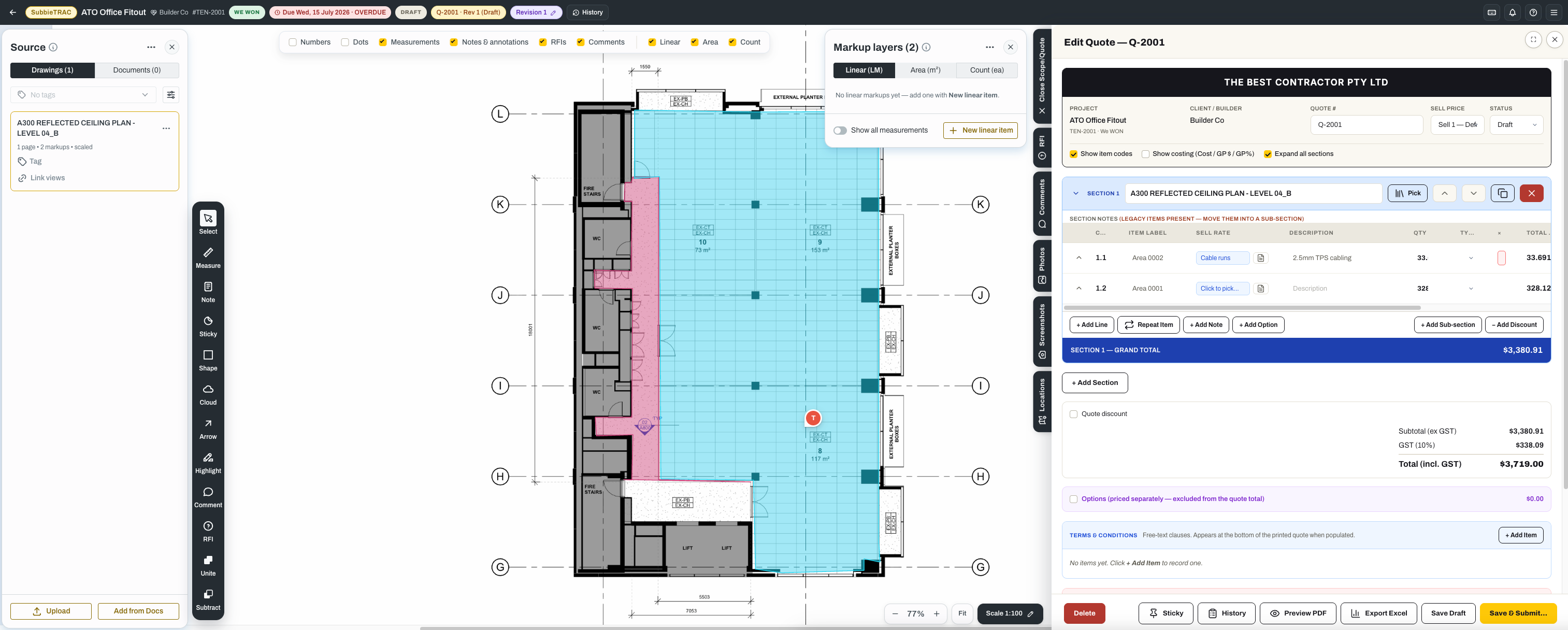
Keep quantities, labour allowances, supplier quotes, scope notes, exclusions and assumptions attached to the work they created.

Outcome: the project begins with a commercial baseline—not a folder dump.
Project manager and site supervisor comparing drawings and a tablet during an interior fitout Project delivery

Site activity must stay connected to the estimate.

Give project teams visibility of the original allowances while they plan labour, materials, procurement, programme and daily actions.

Outcome: teams act before overruns become accepted project reality.
Contracts administrator reviewing project correspondence and variation documents in a site office Contract administration

Every change needs a commercial next step.

Connect instructions, drawings, correspondence, evidence, notices, cost build-ups, variations and claims in one record.

Outcome: recoverable change is identified, supported and progressed earlier.
One connected workflow

Keep the commercial record connected from opportunity to payment.

The information used to win the work stays attached to the project, so every team knows the scope, the risk and the next commercial action.

01

Win the right work

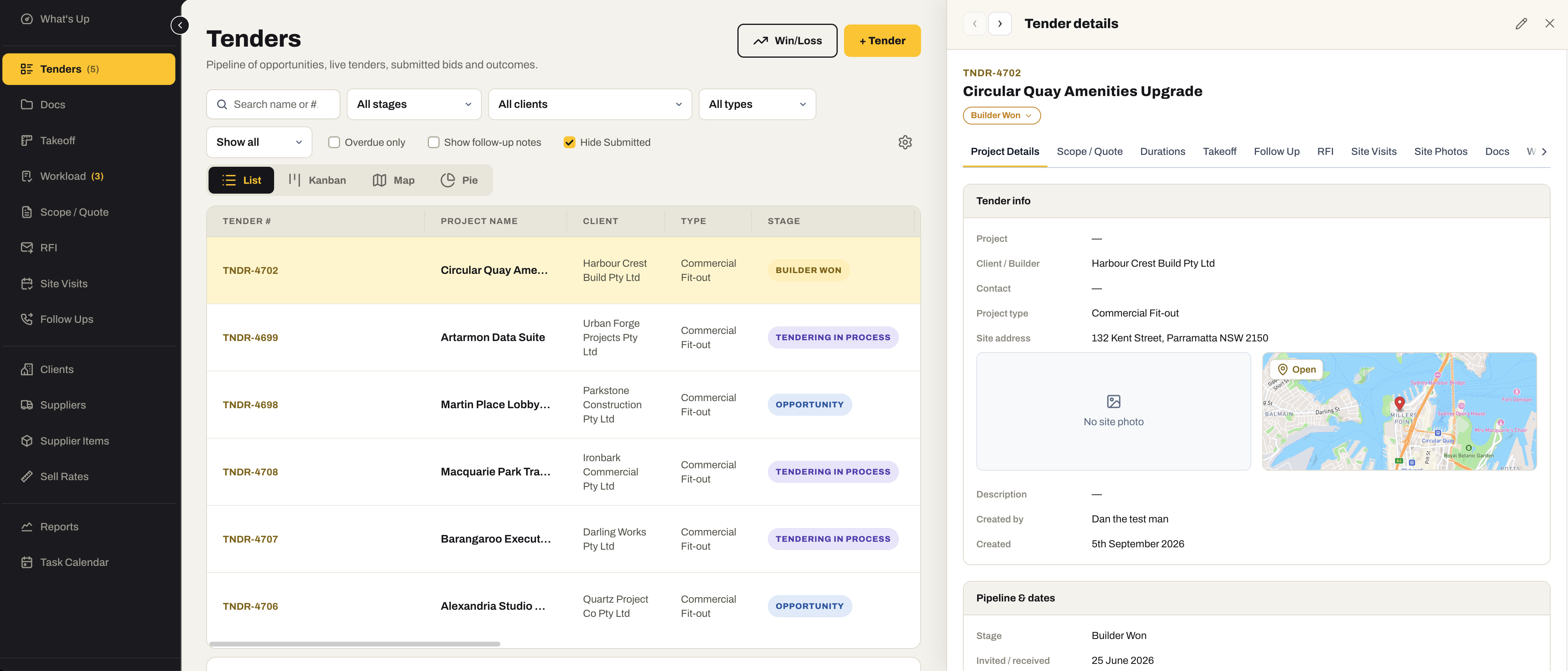
Control tender pipeline, workload, takeoff, pricing, scope and approvals.

02

Handover with clarity

Carry accepted scope, quantities, allowances, exclusions and risks into delivery.

03

Deliver with control

Manage project actions, procurement, site records and progress against plan.

04

Control every change

Connect instructions, RFIs, evidence, notices, variations and claims.

05

Protect the outcome

See exposure, committed cost, claims and forecast margin early enough to act.

Subcontractor business leaders reviewing project performance and margin information
Northbank FitoutAction required
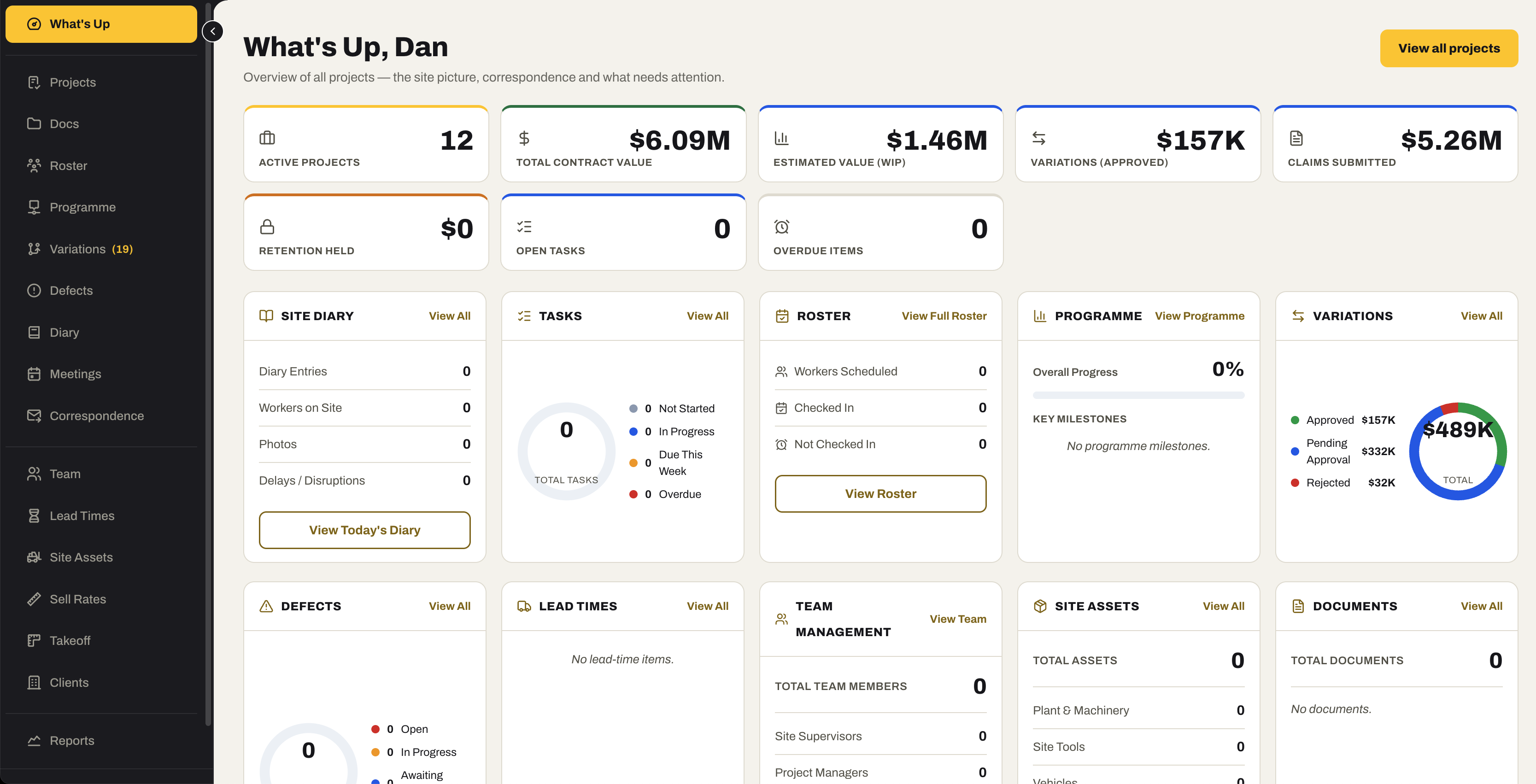
Labour used vs tender allowance74%
Project progress58%
See it early enough to act

Move from explaining losses to preventing them.

SubbieTRAC turns day-to-day project information into early commercial signals, so leaders can intervene while options still exist.

1
Pursue better-fit work

Use pipeline, workload, client fit and delivery capacity to make stronger bid decisions.

2
Mobilise with fewer gaps

Give the project team a structured handover with the exact information behind the accepted price.

3
Capture more recoverable change

Turn site events and instructions into evidence-backed commercial actions before entitlement is lost.

4
Protect margin earlier

Compare delivery performance against the tender baseline before the project becomes a retrospective report.

One platform, three connected disciplines

Built for the full commercial lifecycle.

Start with tenders. Carry the commercial baseline into delivery. Keep every instruction, change and claim connected to the project outcome.

Win work with control, not deadline panic.

Bring opportunity review, takeoff, scope, costing, workload and submission into one repeatable tender process.

Tender pipeline, deadlines, addenda and follow-ups
Takeoff, labour, material and supplier pricing
Scope, inclusions, exclusions and clarifications
Structured tender review and project handover
Estimator working through a commercial tender
Tender workload
14 active tenders
Due this week5
Awaiting supplier price3
2 bids need review
Tender fit
Strong
CapacityAvailable

Deliver from the commercial baseline.

Turn a won tender into an organised project without rebuilding scope, budgets, responsibilities and procurement from scratch.

Accepted scope, quantities, allowances and risk handover
Programme, tasks, diary, procurement and site records
Labour and material performance against the estimate
Project actions shared across office and site teams
Project team managing a live commercial fitout project
Project baseline
58% complete
Labour allowance used74%
Procurement actions6 open
Review labour trend
Today
8 actions
Overdue2

Turn every change into a controlled commercial process.

Keep contract obligations, correspondence, notices, variations, claims and evidence connected to the event that created them.

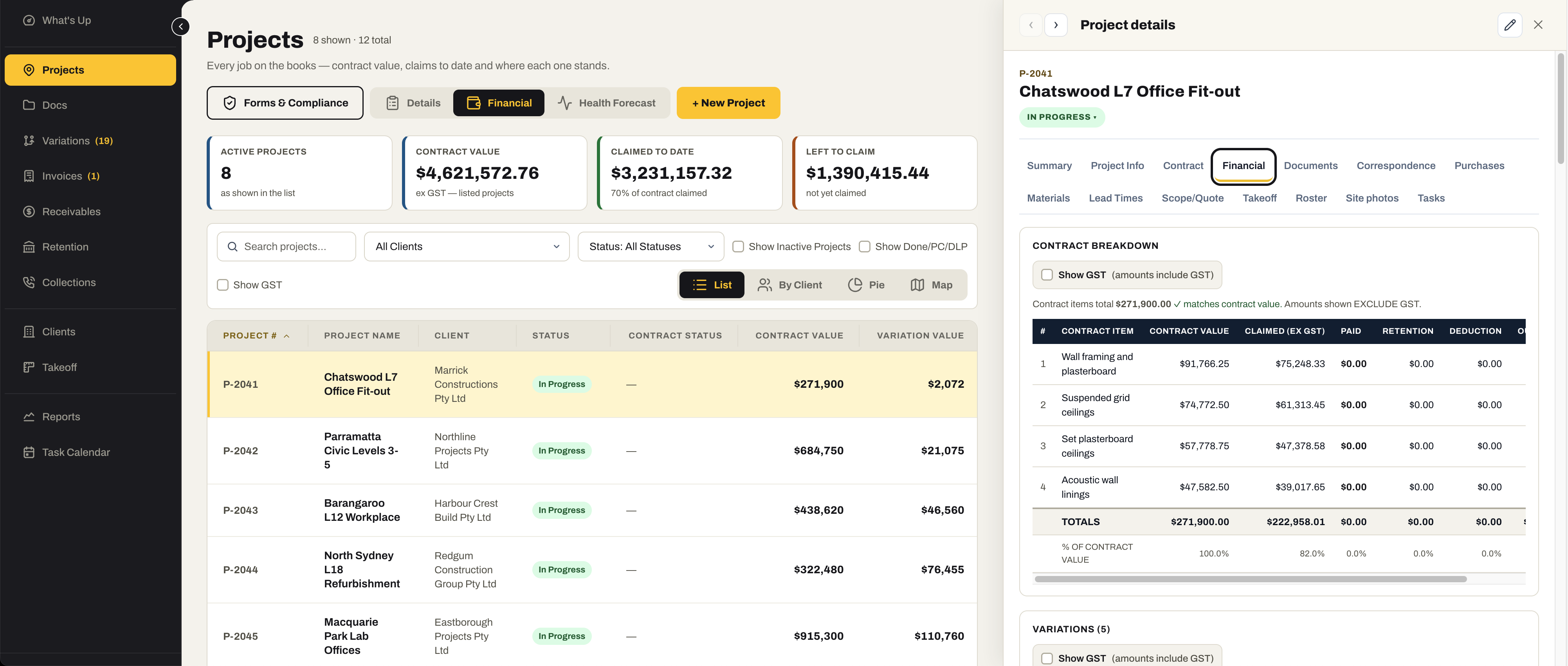
Contract summary, obligations and notice deadlines
Instructions, RFIs, correspondence and drawing changes
Variation pricing, evidence, approvals and exposure
Progress claims, certification, retention and forecast margin
Commercial team reviewing contracts, notices and variation paperwork
Variation register
$184,600 pending
Notice required3
Awaiting approval7
$38,400 due today
Next claim
Friday
Ready to include4 items
Commercial questions answered sooner

Know what your next management meeting needs to know.

Trusted advice starts with the right questions. SubbieTRAC keeps the underlying records connected so your answers are based on the project—not another manually rebuilt report.

01

What did we actually allow for?

See the accepted scope, quantities, labour, materials, supplier pricing, exclusions and assumptions behind the project.

02

What has changed since tender?

Trace revised drawings, instructions, RFIs, site evidence and correspondence back to the affected scope and cost.

03

What needs to be priced, noticed or claimed?

Prioritise commercial actions by deadline, value, approval status and risk of losing entitlement.

04

Is the project still on track to make money?

Compare actual and committed performance against the tender baseline while there is still time to intervene.

One record for every team

Different responsibilities. The same commercial truth.

Estimating

Submit better-controlled tenders.

Manage opportunity fit, takeoff, costs, scope, workload and approvals without losing the context behind the price.

Cleaner tender-to-project handovers.
Project delivery

Know what was planned before deciding what happens next.

Keep site actions, labour, procurement, records and progress connected to the commercial baseline.

Earlier action on delivery risk.
Commercial

Protect entitlement and forecast the outcome.

Control notices, variations, claims, approvals and commercial exposure from one connected project record.

Fewer missed changes and late surprises.
Questions owners ask

Straight answers before you book.

Anything else — ask in the demo. No sales script, just your workflow on screen.

How is this different from spreadsheets plus our current PM tool?

Generic PM tools track tasks; spreadsheets hold numbers. Neither connects what you priced at tender to what's happening on site and what you're entitled to claim. SubbieTRAC keeps that one commercial thread intact, so nothing is retyped and nothing falls between systems.

Will the site team actually use it?

Site input is deliberately light: photos, diary notes and flagging changes — from a phone, in seconds. The commercial heavy lifting stays in the office. If your team can send a WhatsApp photo, they can feed SubbieTRAC.

How long does it take to get set up?

Most businesses start with their next tender — no data migration required. You're running live within a week, and existing projects can be brought in progressively.

Does it replace our accounting software?

No — Xero or MYOB stays your system of record for accounts. SubbieTRAC sits upstream, where margin is actually won and lost: tendering, variations, notices and claims.

Which trades is it built for?

Scope-driven commercial trades: fitout, flooring, painting, partitions and ceilings, joinery, tiling and similar. If you tender against drawings and get paid through progress claims, it's built for you.

What does it cost?

Pricing is per business, based on team size. In the demo we'll give you a straight number — and the maths on what one recovered variation covers.

Commercial subcontractor team collaborating on an interior fitout project
From tender to final claim

Win better work. Control every change. Protect your margin.

See how SubbieTRAC can connect your estimating, project delivery and contract administration workflows around one reliable commercial record.

30 minutes, your tradeNo sales scriptReply within one business day

Book a demo

We'll reply within one business day.

We follow-up, then we leave you alone.